
Electrical insulating mats are used to provide safety in environments where there is a risk of electrical shock. The standards IS 15652 and IEC 61111 define the requirements, testing methods, and classifications for these insulating mats. Here’s a comparison of the two:
Electrical Insulating Mats IS 15652 and IEC 61111 Difference:
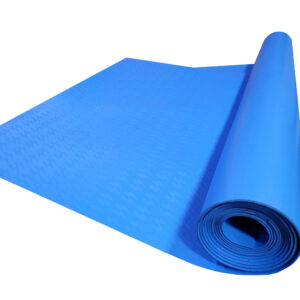
Electrical Insulating Mats IS 15652
- Country/Region: This is an Indian Standard (IS), specifically used in India.
- Scope: It covers the specifications for insulating mats used for electrical purposes.
- Voltage Levels: IS 15652 specifies different classes of mats based on the working voltage. The standard typically covers three classes:
- Class A: Suitable for up to 3.3 kV systems.
- Class B: Suitable for up to 11 kV systems.
- Class C: Suitable for up to 33 kV systems.
- Thickness: The thickness of the mats is specified according to the voltage levels. For example, Class A mats are typically 2 mm thick, while Class C mats can be 3 mm or more.
- Material: IS 15652 primarily specifies the use of rubber or elastomeric compounds for manufacturing the mats.
- Testing: The standard defines various tests, including electrical, mechanical, and aging tests, to ensure the reliability and durability of the mats.
Electrical Insulating Mats IEC 61111
- Country/Region: This is an international standard developed by the International Electrotechnical Commission (IEC), applicable globally.
- Scope: IEC 61111 specifies the requirements for insulating mats for electrical purposes, used worldwide.
- Voltage Levels: IEC 61111 also categorizes insulating mats into different classes, but with a more detailed classification system:
- Class 0: Maximum use voltage of 1,000 V AC.
- Class 1: Maximum use voltage of 7,500 V AC.
- Class 2: Maximum use voltage of 17,000 V AC.
- Class 3: Maximum use voltage of 26,500 V AC.
- Class 4: Maximum use voltage of 36,000 V AC.
- Thickness: The thickness of mats is specified according to the class. For instance, Class 0 mats are typically 1 mm thick, while Class 4 mats can be up to 5 mm thick.
- Material: IEC 61111 also allows the use of rubber, elastomeric compounds, and similar materials.
- Testing: IEC 61111 specifies rigorous testing methods, including electrical, mechanical, and environmental tests, to ensure that the mats meet international safety and performance standards.
You can view more details of Insulating mat IS 15652: Click Here
Electrical Insulating Mats IS 15652 and IEC 61111 Key Differences
- Geographical Application: IS 15652 is an Indian standard, while IEC 61111 is an international standard.
- Classification System: IS 15652 has a simpler classification system (Class A, B, C), whereas IEC 61111 has a more detailed system (Class 0 to Class 4).
- Voltage Range: IEC 61111 covers a broader range of voltage levels compared to IS 15652.
- Thickness Specifications: IEC 61111 typically requires a greater range of thicknesses for different classes compared to IS 15652.
- Testing Rigor: While both standards require testing, IEC 61111 is often considered more comprehensive and rigorous due to its international scope.
You can view more details of Insulating Mats IEC 61111: Click Here
In summary, IS 15652 is tailored for the Indian market and follows a specific set of guidelines suited to local requirements, whereas IEC 61111 is a more comprehensive and internationally recognized standard with a broader classification and testing protocol.